
Infrastructure Installed Without Disrupting Existing Property
Utility Trenching in Dickson for properties requiring water, sewer, electric, and communications infrastructure
Many rural properties in Franklin and surrounding areas lack the utility infrastructure that urban developments take for granted. Running water lines, sewer connections, electric service, or communications cables to a building site requires precise trenching that reaches the correct depth, follows the most efficient route, and avoids damaging existing features. Singleton Land Solutions provides utility trenching for residential and development properties where coordinating with utility providers and executing accurate excavation determines whether infrastructure functions correctly from day one.
Utility trenching involves excavating narrow channels at depths and widths specified by utility companies and local codes. Different utilities require different trench dimensions—water lines often run deeper than communications cables, and sewer lines must maintain consistent slope for gravity flow. A mini excavator allows precise control over trench width and depth while minimizing surface disruption beyond the immediate work area.
Arrange an on-site consultation to review utility routing options and coordinate timing with your utility providers.
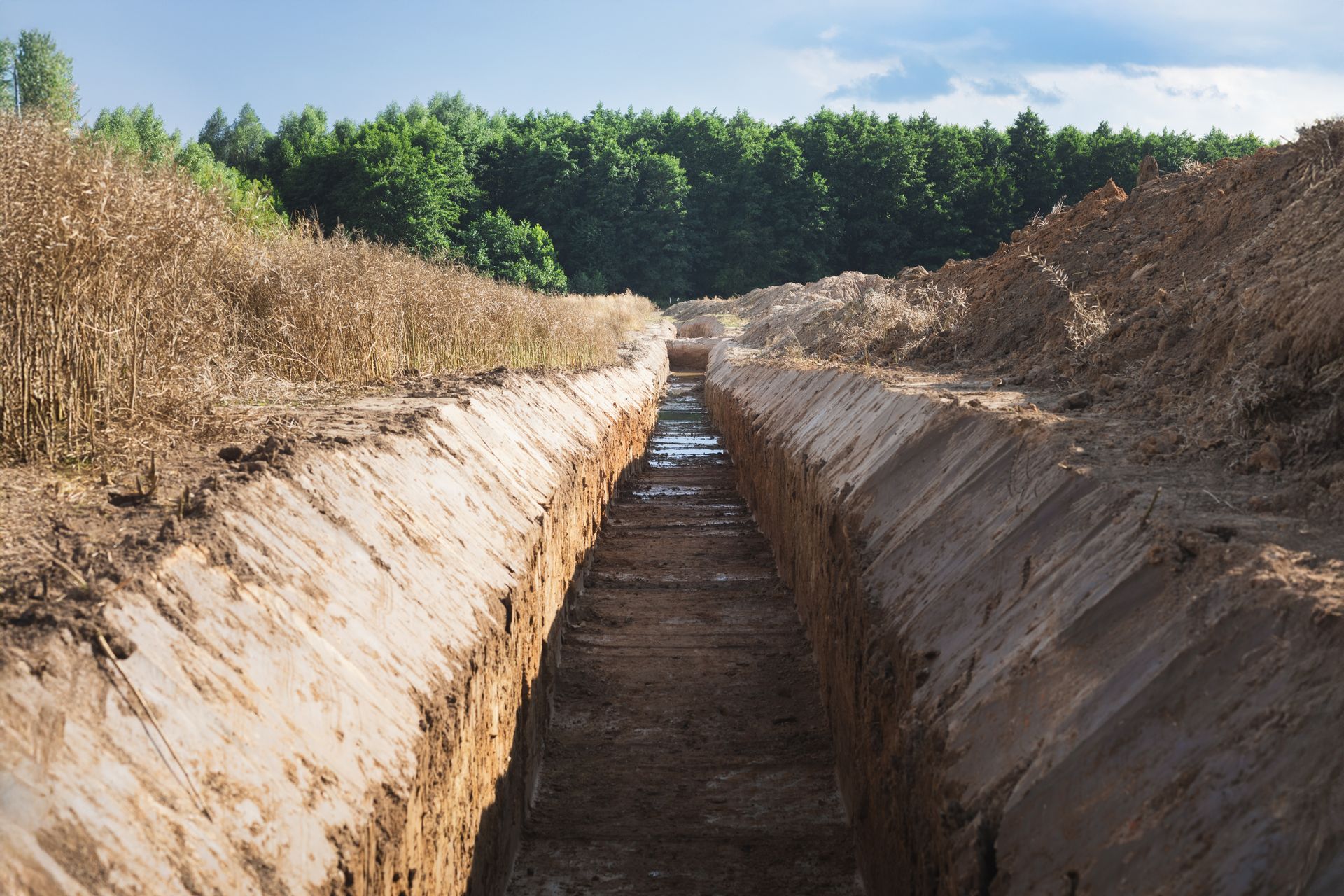
How Utility Trenching Addresses Infrastructure Needs
The trenching process begins with marking utility routes based on property layout, existing infrastructure locations, and utility company requirements. Mini excavator work allows trenches to follow precise paths around obstacles like trees, existing structures, and terrain features. Trenches are dug to specification, inspected, and then backfilled and compacted after utility lines are installed by the appropriate contractors.
After trenching and utility installation are complete, infrastructure runs underground without visible disruption to the property surface, utilities function as designed without voltage drops or pressure loss, and the filled trenches settle evenly without creating depressions that collect water or interfere with mowing and vehicle traffic. Proper compaction during backfilling prevents the trench line from becoming a visible scar or a drainage problem months after the work is finished.
Utility trenching coordinates with the schedules of utility contractors, and in some cases multiple utilities are installed in a shared trench to reduce overall property disruption. The work involves collaboration with water, sewer, electric, and communications providers who each have specific requirements for depth, bedding material, and inspection timing.
Answers to Frequent Service Questions
Understanding utility trenching requirements helps property owners plan site development timelines and coordinate with the various contractors involved in infrastructure installation.
What determines trench depth and width?
Each utility type has code-specified depth requirements—water lines typically run below frost depth, electric lines follow National Electrical Code standards, and sewer lines require consistent slope calculated based on distance and flow requirements.
How is trenching coordinated with utility installation?
Trenches are dug, inspected for proper depth and grade, then utility contractors install their lines before backfilling and compaction occur, often with utility company inspection before the trench is closed.
Why do rural Franklin properties often need utility trenching?
Many rural parcels lie outside municipal utility service areas, requiring individual utility runs from main lines or on-site systems like septic and well installations that demand excavation and trenching.
What happens to the soil removed during trenching?
Excavated material is temporarily stockpiled on-site, then used as backfill once utilities are in place, with compaction applied in layers to prevent future settling along the trench line.
When should utility trenching occur during site development?
Trenching typically happens after rough grading establishes site elevations but before final surface work, allowing utility installation to integrate with the overall site preparation sequence.
Singleton Land Solutions operates mini excavator equipment for utility trenching and works directly with utility contractors to coordinate installation timing across water, sewer, electric, and communications projects in the Dickson area. Schedule a property evaluation to map utility routes and establish a coordination timeline for your development project.