
Building Pads That Support Structures Long-Term
Site Preparation in Dickson for construction projects requiring stable foundations and controlled drainage
Construction on rural Tennessee properties often begins with land that slopes unevenly, retains water in low areas, or contains soil that settles unpredictably under load. Before any building work begins, the site must be graded to eliminate drainage problems, compacted to prevent future settling, and leveled to support foundations that remain stable for decades. Singleton Land Solutions prepares rural and development sites across Franklin and surrounding areas where proper foundation preparation determines whether structures perform as designed or develop cracks, moisture intrusion, and structural movement within the first few years.
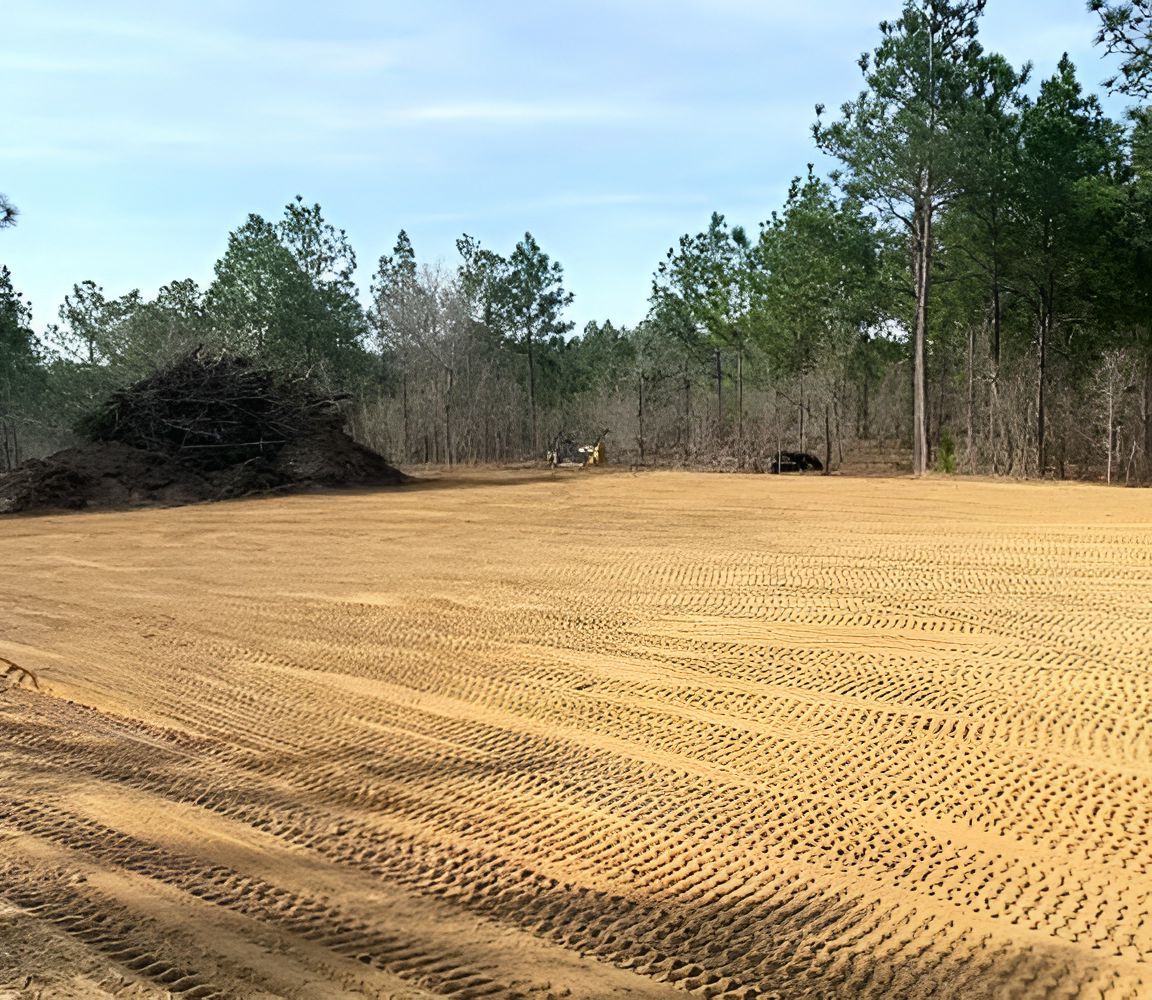
Site preparation involves clearing vegetation and debris, excavating and grading to establish correct elevations, compacting soil in layers to prevent settling, and creating drainage paths that direct water away from building areas. For larger structures like workshops or commercial buildings, the process includes creating level pads that span the entire footprint plus additional area for access and equipment staging. A recently completed 100-foot by 140-foot shop pad in McEwen required precision grading to maintain consistent elevation across the entire surface and compaction work to support heavy equipment loads without developing depressions or cracks.
Schedule a site evaluation to assess your property's current condition and identify grading, drainage, and compaction requirements before construction begins.
The Difference Between Adequate Prep and Proper Prep
Site preparation uses skid steer equipment, mini excavator work for footer excavation, and both flat and spike rollers to compact and finish building pads. Flat rollers create smooth surfaces suitable for concrete placement, while spike rollers penetrate deeper to compact underlying soil layers. The preparation sequence moves from rough grading to establish overall site drainage, through fine grading to create level building surfaces, to final compaction that prevents settling after structures are built.
After site preparation is complete, building pads remain level without developing low spots that collect water, foundations can be poured without concern for differential settling, and drainage systems function as designed because the surrounding grade slopes away from structures. The prepared site supports the weight of buildings and equipment without surface cracking or subsidence, and water from rain events flows toward designated drainage areas rather than pooling near foundations or access routes.
Site preparation projects vary based on property size, soil conditions, and the type of structure being built. Residential building sites on one- to two-acre parcels require different approaches than commercial developments or agricultural structures on larger acreage, and properties with significant elevation changes demand more excavation and grading than relatively flat sites.
Questions Before Starting Your Project
Site preparation decisions made early in a project affect construction timelines, foundation performance, and long-term maintenance requirements.
What happens during site preparation for a building pad?
Vegetation and topsoil are cleared, the area is excavated or filled to establish the target elevation, soil is compacted in layers using roller equipment, and final grading creates smooth, level surfaces for foundation work.
How does compaction prevent future foundation problems?
Compacted soil resists settling under structural loads, preventing differential movement that causes foundation cracks, floor slopes, and door or window frame distortion as buildings age.
Why do Franklin-area properties require custom site preparation?
Variable terrain, clay-heavy soils, and seasonal weather patterns mean each property needs grading and compaction tailored to its specific conditions rather than a one-size-fits-all approach.
What equipment is used for site preparation work?
Skid steer loaders handle material movement and grading, mini excavators dig footer trenches and drainage channels, and flat and spike rollers provide the compaction necessary for stable building surfaces.
When should site preparation be completed relative to construction?
All grading, compaction, and drainage work must finish before foundation construction begins, ideally during dry weather when soil compacts most effectively and equipment operates without creating additional surface disruption.
Singleton Land Solutions owns and operates the equipment used for site preparation and handles the full workflow from clearing through final grading and compaction for projects across the Dickson and Franklin area. Request a detailed estimate based on your property's topography and the specific building requirements for your project.