
Site Prep That Leaves Ground Ready
Forestry Mulching in Dickson for farm properties and rural acreage requiring erosion control and in-place vegetation processing
Forestry mulching converts standing trees, brush, and woody debris into ground-level mulch without hauling material off-site. Singleton Land Solutions uses mulching equipment to process vegetation in place, creating a layer of organic material that holds soil, controls erosion, and prepares land for future development or pasture use. On one- to two-acre properties around Franklin and McEwen, mulching eliminates the need for burn piles or debris trailers, reducing project time and leaving behind a surface that decomposes naturally over the following seasons.
The process grinds trees up to several inches in diameter into chips and shreds that settle into a mat covering bare soil. This method works well for firebreak creation, property line clearing, and site preparation where vegetation removal needs to happen quickly without disturbing topsoil layers underneath.
Request a property assessment to determine mulching feasibility based on tree density and terrain access.
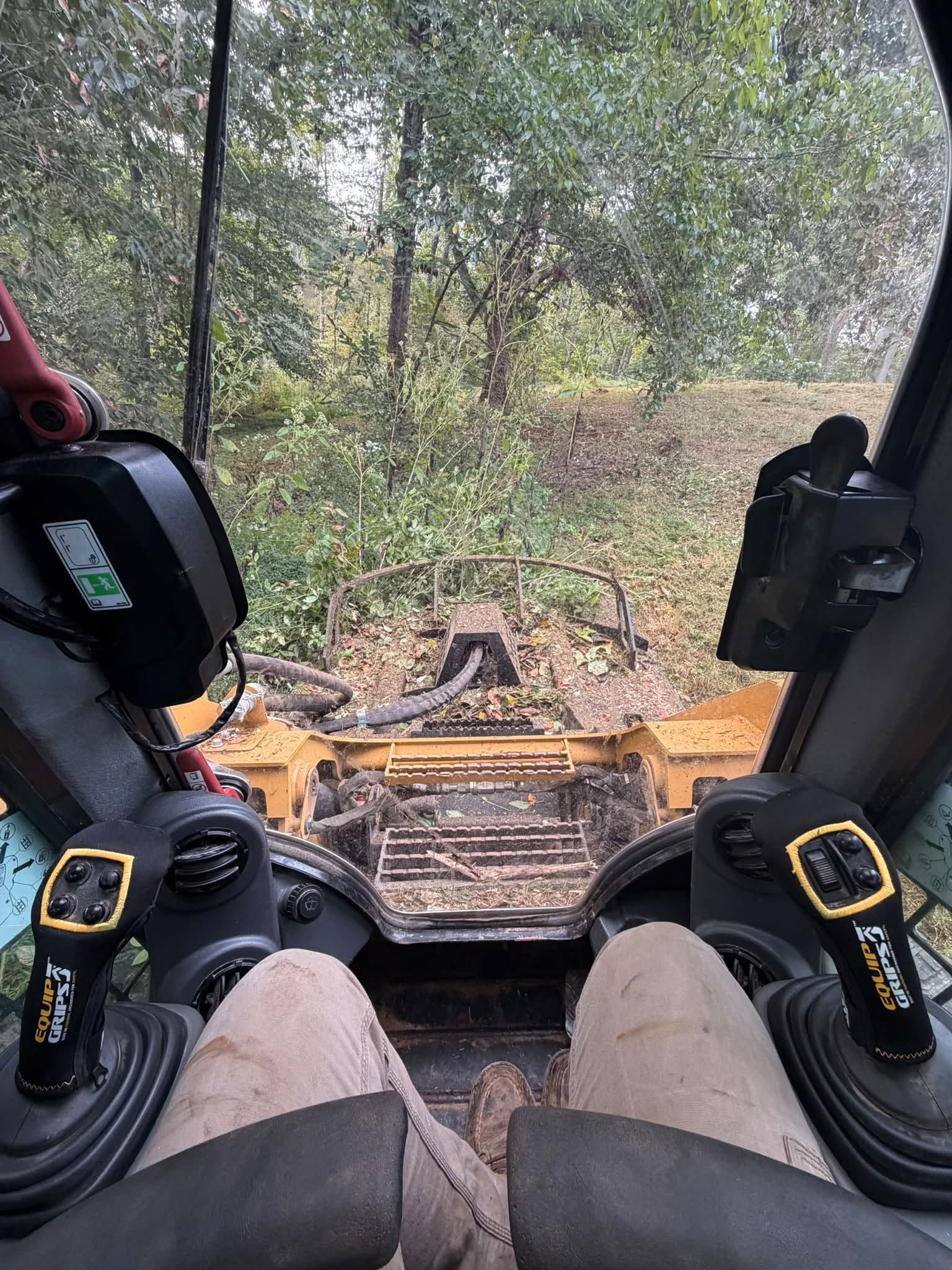
What Changes After Mulching Completes
Mulching equipment processes trees and brush as it moves across the property, shredding material into small pieces that spread evenly over the ground. The mulch layer typically measures two to four inches deep, depending on vegetation density before clearing. This covering prevents weed growth during the first growing season and gradually breaks down, adding organic matter back into the soil.
Once mulching finishes, you'll see a cleared area with no stumps protruding above ground, a consistent layer of wood chips covering exposed soil, and defined boundaries where mulching stopped and existing vegetation remains. Water absorbs into the mulch rather than running off bare dirt, and slopes that previously eroded during storms stay intact through rain events. The site becomes accessible to vehicles and equipment without ruts forming in soft ground, which matters for properties where additional grading or utility work follows clearing.
Market rates for forestry mulching run five to six thousand dollars per acre in Middle Tennessee, with costs adjusting based on tree size, terrain slope, and whether multiple passes are needed to process dense hardwood stands. Larger properties may require several days to complete, particularly if equipment must navigate around wet areas or avoid damaging existing fences and structures.
Common Questions About This Service
Rural property owners considering mulching often ask how it compares to traditional clearing and what happens to the processed material over time.
How does forestry mulching differ from standard land clearing in terms of site impact?
Mulching leaves topsoil and root systems intact because equipment grinds vegetation at ground level rather than pulling stumps and disturbing underlying soil layers, which reduces erosion risk and eliminates the need for backfilling or regrading after clearing.
What size trees can mulching equipment process?
Most forestry mulchers handle trees up to eight inches in diameter, though larger equipment processes hardwoods up to twelve inches—beyond that, trees typically require cutting with chainsaws before mulching or removal as whole trunks.
When does mulching work better than chipping or hauling debris?
Mulching makes sense on properties where debris disposal is difficult due to access constraints, burning restrictions, or distance to disposal sites—processing material in place saves time and avoids costs associated with loading and transporting vegetation.
Why do Franklin-area properties benefit from mulch covering after clearing?
Franklin's rolling terrain and clay soils are prone to erosion during heavy rain, and the mulch layer absorbs water while holding soil in place until vegetation regrows or permanent ground cover gets established.
What ground preparation happens before construction if mulching precedes building?
Mulch gets scraped aside in areas where foundations, driveways, or utility trenches will be excavated, then redistributed around the site after construction to prevent erosion and suppress weeds in non-building zones.
Singleton Land Solutions provides forestry mulching across Franklin, McEwen, and Pleasant View, handling site preparation for rural properties where in-place processing reduces project complexity and preserves soil stability. Contact us to schedule a site visit and discuss mulching scope for your acreage.