
Land That Drains Properly After Every Storm
Grading in Dickson for rural properties requiring drainage control and stable building pads
Rural properties across Middle Tennessee face a persistent challenge: rainwater that pools in driveways, saturates building sites, or erodes access roads after heavy weather. Singleton Land Solutions handles site grading and land preparation for residential, rural, and commercial projects where precision drainage and stable surfaces determine whether a property functions reliably or requires constant rework. Properties ranging from one to two acres in Franklin and surrounding areas require custom grading that accounts for variable terrain, existing drainage patterns, and the specific use planned for each section of land.
Grading reshapes land surfaces to control water movement, create level building areas, and establish stable foundations for driveways and structures. The work involves removing high spots, filling low areas, and establishing slopes that direct water away from buildings and toward appropriate drainage points. In variable terrain common to this region, the difference between effective grading and inadequate work shows up immediately during the first significant rain event.
Schedule a property evaluation to identify drainage concerns and building pad requirements specific to your land's current condition.
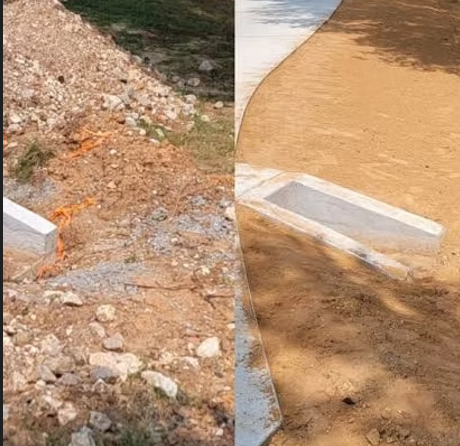
What Proper Site Grading Requires
Site grading uses skid steer equipment combined with flat and spike rollers to achieve both the correct elevation and the necessary compaction. Flat rollers create smooth, even surfaces for driveways and parking areas, while spike rollers penetrate and compact the soil layers beneath, preventing future settling. The process involves multiple passes, with each layer evaluated before additional material is added or the surface is refined.
Once grading is complete, water no longer stands in low spots after storms, driveways remain stable without developing ruts or washouts, and building pads stay level without settling unevenly over time. The graded surface sheds water in a controlled direction rather than allowing it to migrate toward structures or saturate areas where vehicles need traction. On larger projects, such as a recently completed 100-foot by 140-foot shop pad, the finished surface shows no variation in elevation across the entire area and remains stable under the weight of equipment and materials.
The scope of grading work depends on current site conditions, the intended use of each area, and whether additional features like drainage channels or retaining structures are needed. Grading for a building pad involves more extensive excavation and compaction than grading for a simple access path, and properties with significant elevation changes require more material movement than relatively flat sites.
What Property Owners Usually Ask
Grading projects vary significantly based on property conditions and project goals, and understanding what the work involves helps clarify what to expect during site preparation.
What happens during the grading process?
The site is cleared of vegetation and debris, high areas are cut down and low areas are filled, and the surface is compacted in layers using roller equipment to prevent future settling.
How does grading prevent water damage?
Proper grading establishes slopes that direct water away from structures and toward drainage areas, eliminating standing water and preventing soil saturation near foundations and driveways.
Why do rural properties in Dickson require custom grading?
Variable terrain, clay-heavy soils, and seasonal rainfall patterns mean each property needs grading tailored to its specific topography and drainage challenges rather than a standard approach.
What equipment is used for site grading?
Skid steer loaders move material and shape surfaces, while flat rollers create smooth finishes and spike rollers compact underlying soil layers to prevent settling under load.
When should grading be completed?
Site grading should be finished before construction begins, ideally during dry weather when soil compacts more effectively and equipment can operate without creating ruts in saturated ground.
Singleton Land Solutions operates the equipment and handles the grading workflow from initial site assessment through final compaction, with most core equipment owned rather than rented for projects across the Dickson and Franklin area. Request a detailed estimate based on your property's current topography and intended use.