
Roads That Hold Up Under Constant Use
Access Road Construction in Dickson for rural and farm properties requiring durable vehicle corridors
Larger rural properties across Middle Tennessee depend on access roads that connect buildings, fields, and storage areas to main roadways. Without properly constructed access routes, farm equipment bogs down in mud during wet weather, delivery vehicles refuse to drive onto the property, and ruts develop that require constant regrading. Singleton Land Solutions builds farm and property access roads on rural acreage where long-term durability and proper drainage separate functional infrastructure from roads that fail within a single season. Properties across Franklin, Dixon, and McEwen often span significant distances from public roads to building sites, requiring custom routing and professional grading to maintain usability year-round.
Access road construction involves clearing and grading the road corridor, establishing drainage features that prevent water from eroding the roadbed, compacting the base using flat and spike rollers, and installing gravel that creates a stable driving surface. Road routing considers property topography, avoids steep grades that become impassable in winter, and positions drainage to direct runoff away from the road surface.
Arrange a property consultation to review routing options and discuss drainage requirements for your access road project.
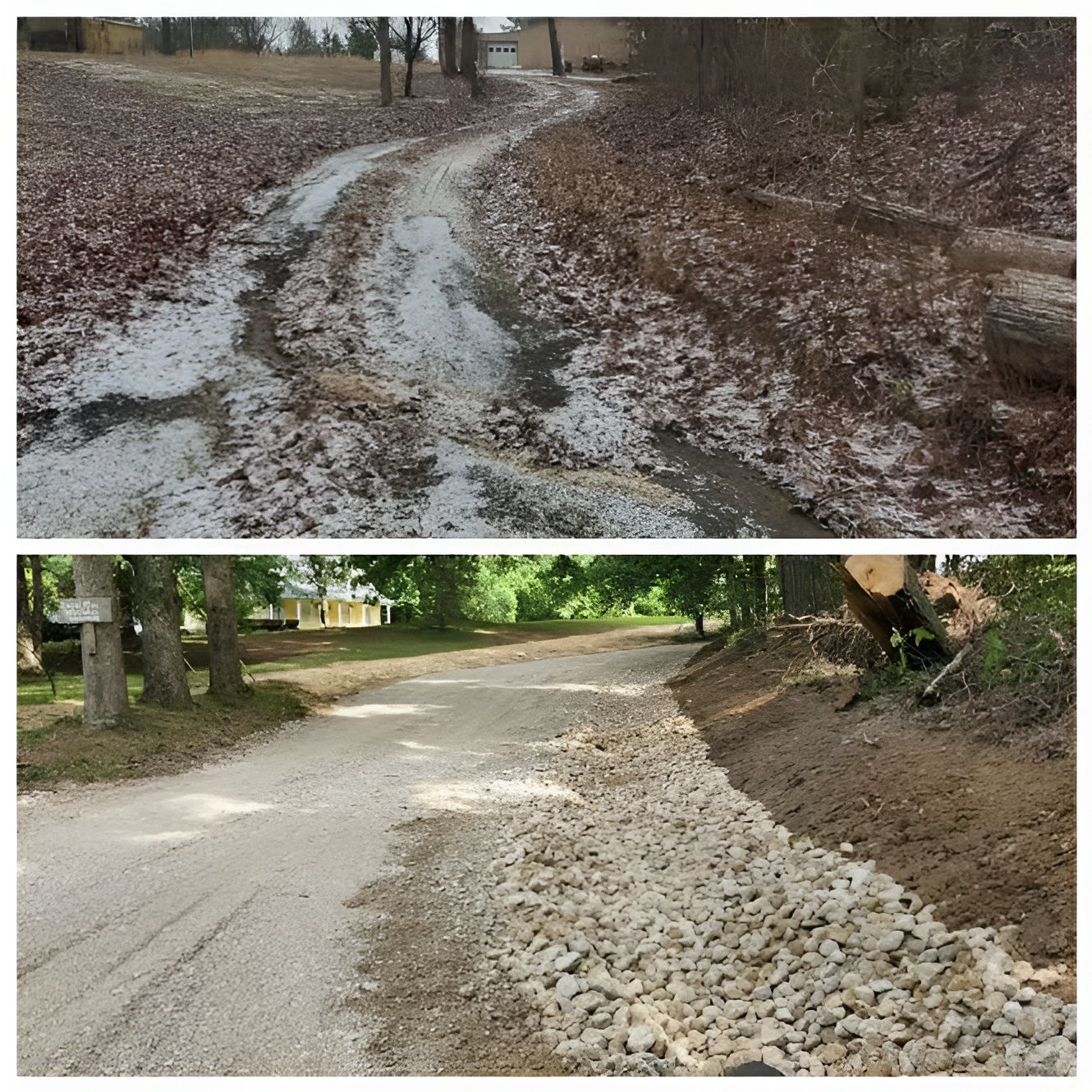
Why Proper Road Construction Works for Long-Term Access
Road construction uses grading equipment to establish the corridor and create a crowned or sloped surface that sheds water, then compaction equipment including flat and spike rollers to stabilize the base before gravel installation. The crowned profile prevents water from standing on the road surface and directs it toward drainage ditches or culverts positioned along the route. Gravel is spread in layers and compacted to create a surface that supports vehicle weight without rutting or displacement.
Once access road construction is finished, vehicles travel the route without getting stuck or creating ruts, the road surface remains stable through wet weather and seasonal freeze-thaw cycles, and maintenance requirements reduce to occasional gravel addition rather than constant regrading. Drainage features function as designed, preventing washouts during heavy rain and eliminating standing water that weakens the roadbed. On larger properties, access roads integrate with building site preparation and utility installation to create a coordinated site-development plan.
Access road projects vary in scope based on property size, terrain, and intended use. Roads serving farm equipment require wider corridors and heavier gravel than roads used only for passenger vehicles, and routes crossing steep or unstable terrain demand more extensive grading and drainage work than roads on flat land.
Common Questions About This Service
Access road decisions affect property usability, long-term maintenance costs, and how well the infrastructure performs across changing seasons and weather conditions.
What makes an access road durable over time?
A properly graded base that sheds water, compacted layers that resist settling and rutting, and sufficient gravel depth to support vehicle loads without allowing tires to reach the underlying soil.
How is road drainage designed to prevent washouts?
The road surface is crowned or sloped to direct water off the driving surface, and ditches or culverts positioned along the route channel runoff away from the roadbed before it can erode or saturate the base.
Why do rural properties in the Franklin area require professional road construction?
Properties often span significant distances with variable terrain, and seasonal rainfall combined with clay-heavy soils means roads built without proper drainage and compaction fail quickly under regular use.
What equipment is used to build access roads?
Skid steer loaders and trucks move and spread gravel, mini excavators install culverts and drainage features, and flat and spike rollers compact the base and gravel layers to prevent future settling.
When should access road construction occur during property development?
Roads are typically built after rough site grading establishes overall property elevations but before heavy construction traffic begins, allowing the road to serve as infrastructure for subsequent development phases.
Singleton Land Solutions operates a fleet including trucks, gooseneck trailers, skid steer equipment, and mini excavator for full-scale access road construction on properties across Dickson, Franklin, and McEwen. Schedule a routing assessment to establish a construction plan tailored to your property's terrain and access requirements.